

Define the end product first
Dancewear, stage costumes, cheerleading uniforms and performance outfits do not require exactly the same construction. A fitted bodysuit usually needs a flexible stretch base, while a stage skirt or costume panel may prioritize drape, pleat structure or a stronger surface effect. Props and backdrops may need a more stable textured material.
Compare the supplier's fabric range
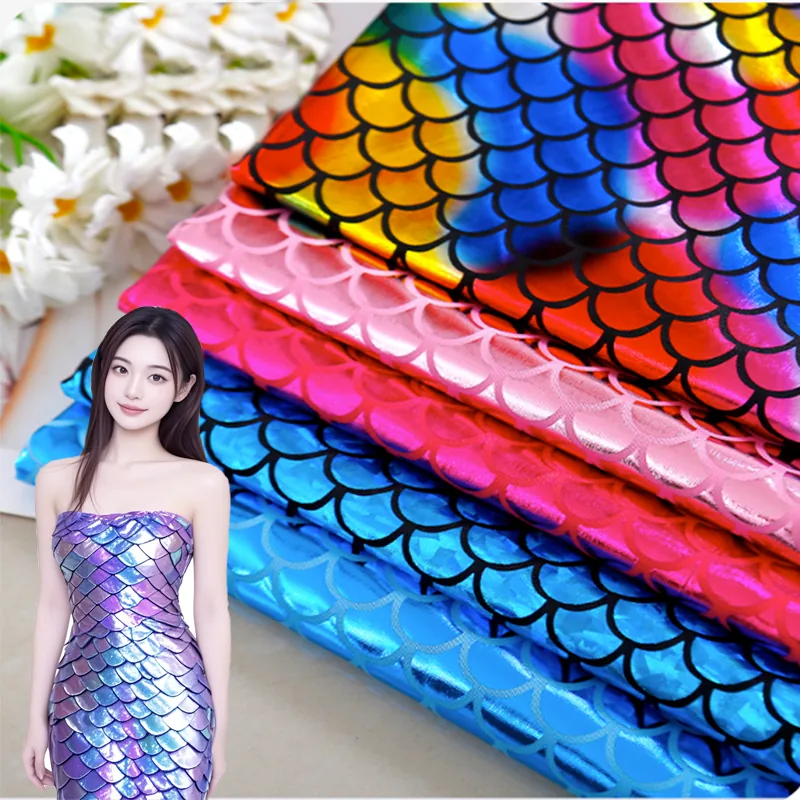
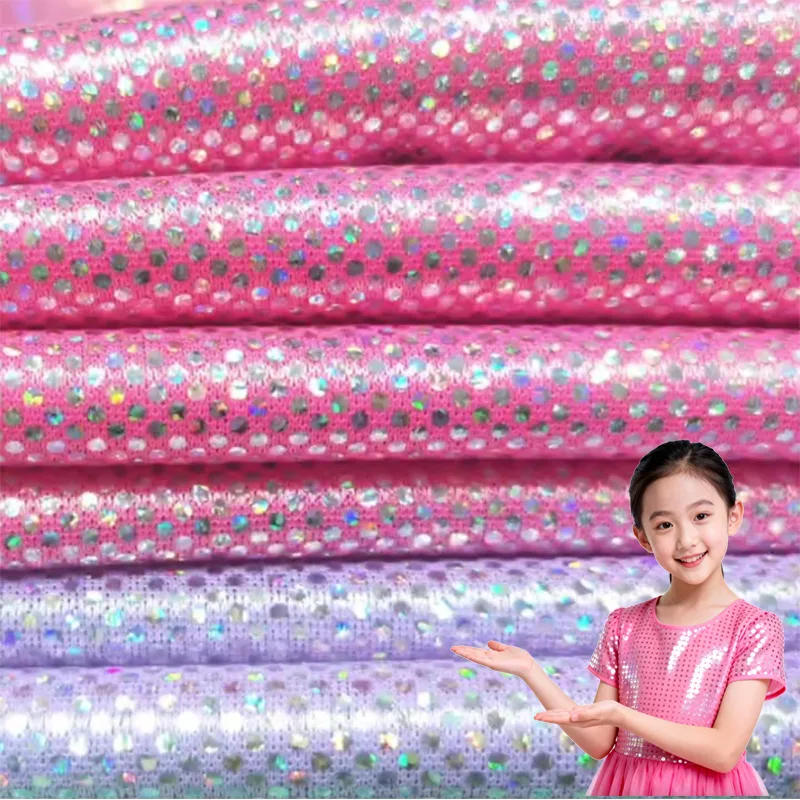
A focused foil fabric supplier should be able to show several surface routes: full-print foil, iridescent laser, holographic texture, gradient foil, dot foil and pleated foil. A broader range helps buyers compare the visual effect against the base fabric instead of selecting from one isolated sample.
Confirm commercial details before comparing price
Confirm MOQ, ready-stock or made-to-order status, sample terms, standard roll length, width, quotation unit and production timing. These details make supplier comparisons meaningful and help the factory recommend a practical route.
Test the sample in the real production process
Test the sample on the buyer's own pattern or a small production panel. Check stretch and recovery, cutting, stitching, seam appearance, hand feel, surface reflection and color under the intended lighting. Foil fabrics can behave differently after construction than they appear in a flat photo.
- Stretch lengthwise and crosswise where the garment requires movement.
- Check recovery after repeated stretching.
- Test the foil surface after cutting, sewing and handling.
- Compare the approved color under the final performance lighting.
Prepare a complete wholesale RFQ
Include the end product, target surface, color or reference image, estimated quantity, required width, destination country, sample requirement and timeline. This allows the supplier to judge whether a stock item, sample-first route or custom development is appropriate.
Confirm these points before you order
- End product and movement requirement
- Surface effect: metallic, laser, holographic, gradient, dot or pleated foil
- Width, weight, stretch and base fabric requirement
- MOQ, sample cost, stock status and lead time
- Destination, quantity and expected delivery window
Turn this guide into a usable supplier request
Share the garment type, target look, stretch requirement and expected use environment.
Check color, hand feel, surface effect, stretch recovery and sewing behavior before bulk approval.
Include quantity, destination, timeline, custom needs and any testing or documentation requests.



Before you request a quotation
What should I ask a wholesale foil fabric supplier?
Ask about the base fabric, surface effect, width, stretch, MOQ, stock status, sample terms, bulk lead time, custom options and shipping details.
Can I request samples before a wholesale order?
Yes. Samples are recommended so buyers can check color, surface effect, stretch, sewing behavior and suitability for the final garment.
Is ready stock better than custom foil fabric?
Ready stock is usually faster for testing or urgent orders. Custom development is more suitable when the project requires a specific color, pattern, gradient or base fabric.