

Checklist focus
Check movement needs
If performers dance, bend or move repeatedly, the fabric should stretch and recover. For fitted garments, ask whether the material has 4-way stretch and whether the foil surface can handle normal garment movement.
Review shine under stage lighting
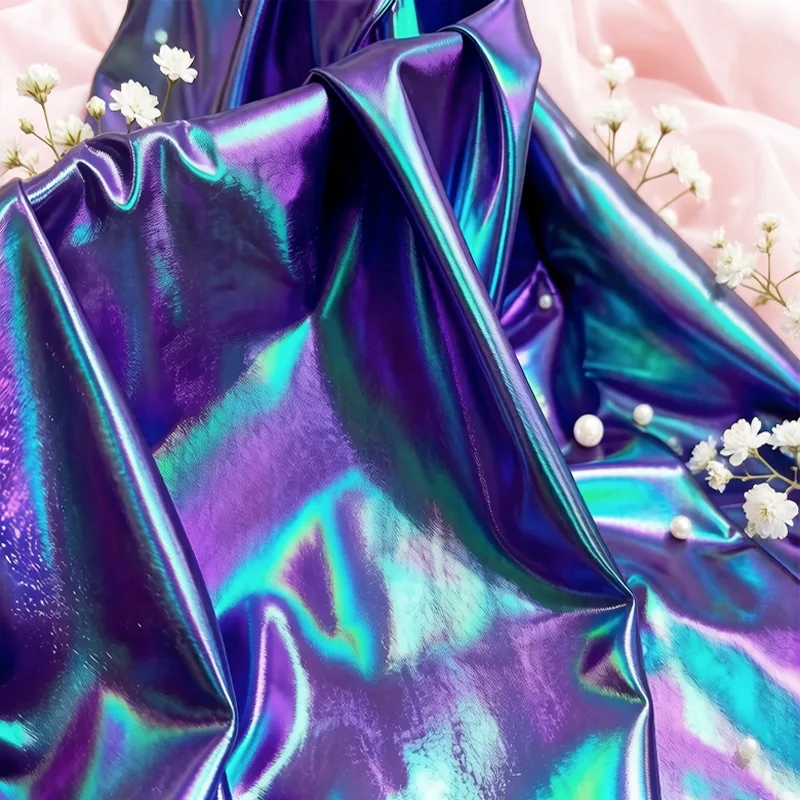
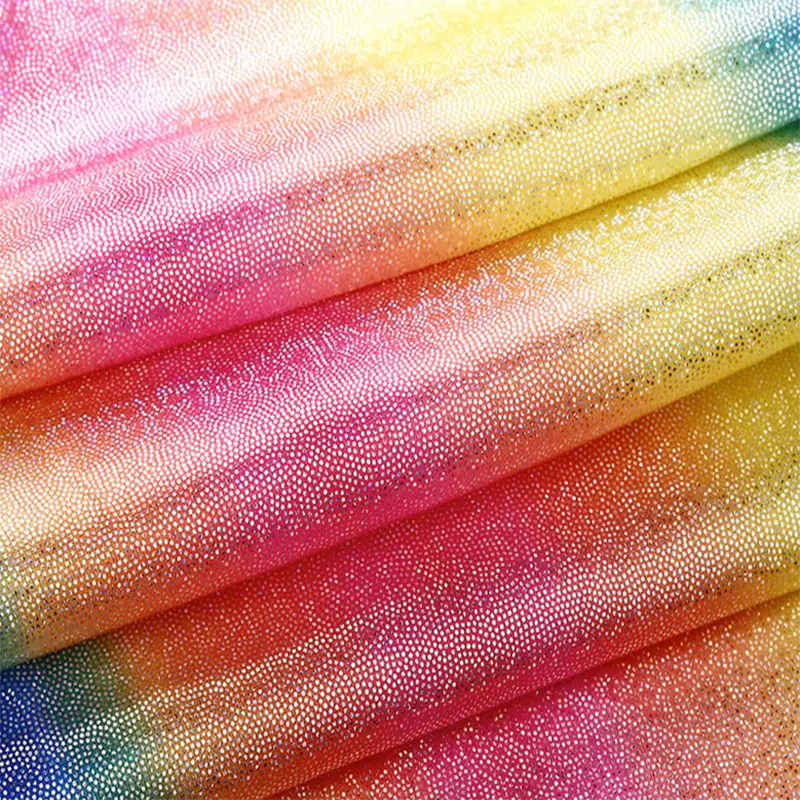
A fabric can look different under daylight, LED stage lighting and camera flash. Buyers should review samples under the closest lighting condition to the real show.
Confirm width and MOQ
Width affects cutting layout and fabric consumption. MOQ affects whether a trial order is practical. Common references include 150 cm / 59 in width and 100 m / 109 yd MOQ for many stock stretch fabrics.
Approve samples before bulk order
A sample should be checked for color, stretch, surface effect, sewing behavior and batch comparison. Keep an approved sample so both buyer and supplier can compare bulk production against it.
Confirm these points before you order
- Confirm whether the costume needs 2-way or 4-way stretch
- Review shine under stage lighting and camera conditions
- Check width, MOQ, stock status and bulk lead time
- Sew and stretch a sample before production approval
Turn this guide into a usable supplier request
Share the garment type, target look, stretch requirement and expected use environment.
Check color, hand feel, surface effect, stretch recovery and sewing behavior before bulk approval.
Include quantity, destination, timeline, custom needs and any testing or documentation requests.



Before you request a quotation
What stage costume fabric is best for fitted garments?
A 4-way stretch foil or holographic fabric is often suitable when the costume needs both shine and body movement.
Why should I test fabric under stage lights?
Foil and iridescent finishes can change under different lighting, so stage-light testing gives a more realistic approval result.