

At a glance for foil fabric buyers
Stock fabric is faster, but not always enough

For many buyers, stock foil fabric is the right first step. It lets the design team review physical shine, stretch and hand feel quickly. It also helps the factory quote a realistic sample or small bulk order without waiting for a new development cycle.
But stock fabric has limits. If the collection needs a very specific color shift, an exact gradient direction, a branded pattern scale or a base fabric that matches a known garment construction, available stock may only be close, not correct. That is when custom foil fabric development should be discussed.
When stock foil fabric is the better choice
Stock foil fabric is usually better when the buyer needs speed, physical samples, quick comparison or a lower-risk first order. It is also useful when the final garment does not require an exclusive surface effect.
For dance teams, stage costume makers and small seasonal collections, stock fabrics can reduce development time. Buyers can compare existing foil, iridescent and holographic surfaces, test sewing performance and move to a trial order faster.
- The project needs fast sampling or urgent production.
- Existing color and foil effect already fit the design direction.
- The buyer wants to test a smaller quantity before committing to development.
- The garment factory needs a proven material for cutting and sewing trials.
When custom foil fabric development makes sense

Custom development makes sense when the material is part of the product identity, not just a decorative option. If the fabric must match a specific stage concept, team color, brand palette, printed motif or performance requirement, the buyer may need development support instead of selecting from stock.
Custom is also useful when the surface effect and base fabric must be matched together. A beautiful foil surface will not solve the project if the base fabric does not stretch, drape or recover correctly for the garment.
What can be customized
Custom foil fabric development can involve the foil color, laser effect, printed pattern, gradient direction, base fabric, width, hand feel or roll planning. The available route depends on the requested effect, order quantity and technical feasibility.
For stretch performance apparel, the most important customization question is whether the final material still works after stretching, cutting and sewing. A custom color is only useful if the finished garment keeps the required appearance and movement.
| Custom Item | What Buyers Can Discuss | Why It Matters |
|---|---|---|
| Foil color or laser effect | Metallic, iridescent, holographic or buyer-specific color direction | Controls the visual identity under stage and studio light. |
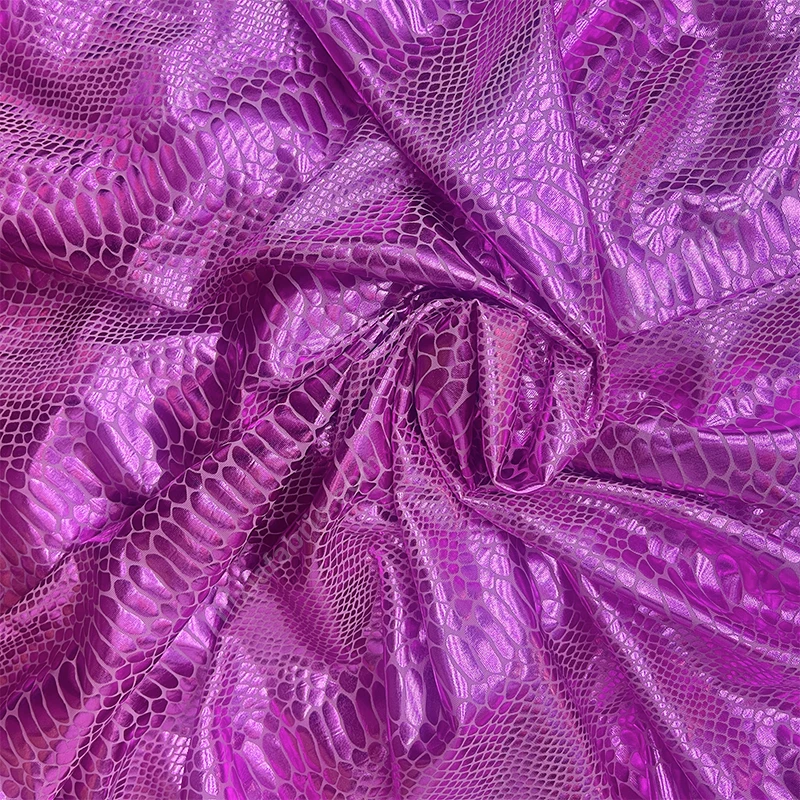
| Pattern or print scale | All-over print, motif size, spacing or surface direction | Helps align the material with costume and collection design. |
| Gradient direction | Color flow, transition area and roll direction | Important for panels, skirts, sleeves and matched garment pieces. |
| Base fabric | Spandex, milk-silk, stretch ice-silk or other suitable stretch base | Decides comfort, recovery, drape and sewing behavior. |
| Width and production planning | Usable width, roll length and bulk quantity route | Affects cutting yield, MOQ and delivery planning. |
Key questions to confirm before custom development
A custom request should be specific enough for the factory to judge feasibility. The buyer does not need a perfect technical file at the first conversation, but the request should include the intended product, target effect, base fabric need, expected quantity and timeline.
Reference photos are useful, but they should not be the only instruction. Photos often change color under different lighting, so they work best together with a physical sample target or a clear description of where the material will be used.
- What is the final application: dancewear, stage costume, bodysuit, skirt, team uniform or carnival costume?
- Does the garment need 4-way stretch, soft drape, strong recovery or a more stable structure?
- Is the buyer matching an existing color, a photo reference or a new collection direction?
- What quantity range and delivery timing should the factory plan around?
- Will the buyer approve a lab sample, hand sample or pre-production sample before bulk goods?
Sample development process
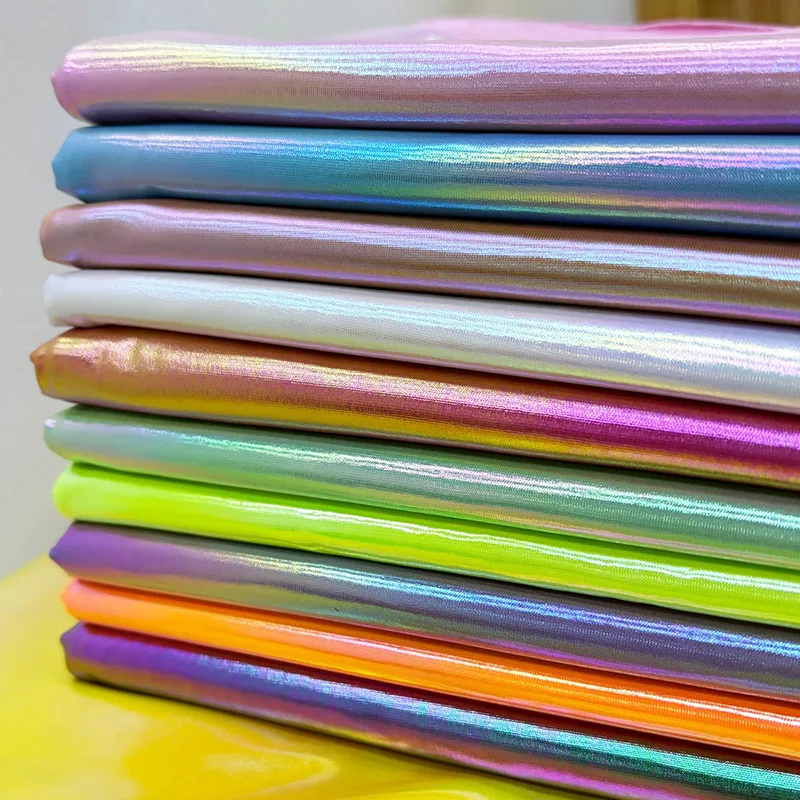
A practical custom route usually begins with the buyer's application and visual target. The factory then recommends a base fabric and foil process, prepares a sample direction and confirms whether the result is suitable for the buyer's garment construction.
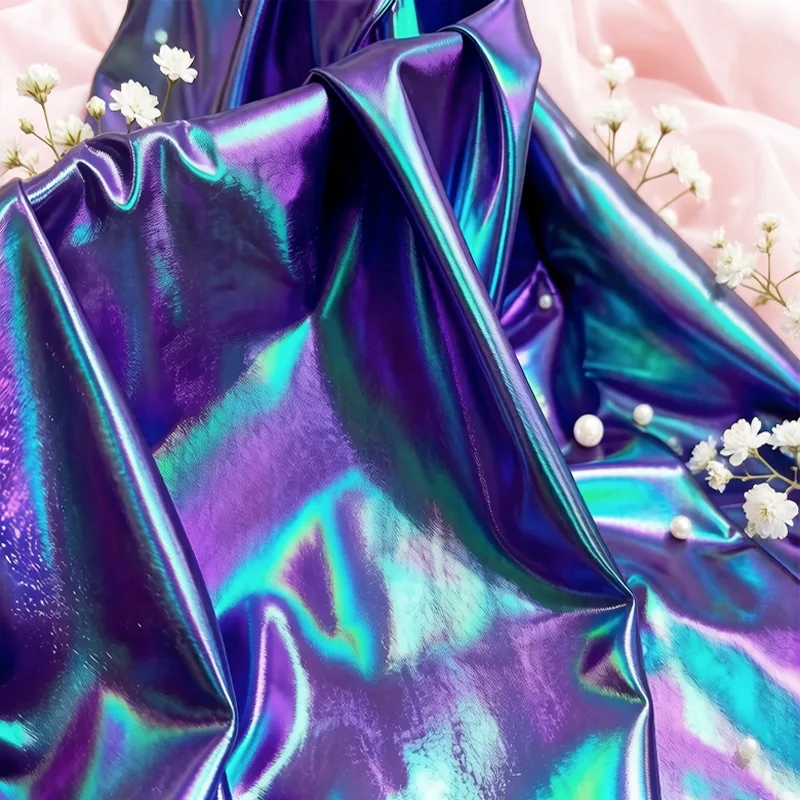
After the first sample, the buyer should review shine, stretch recovery, color shift, surface consistency, cutting behavior and sewing performance. If the project is for stage costumes or performance apparel, the sample should also be reviewed under strong light because foil effects can change dramatically between indoor lighting and stage lighting.
MOQ and lead time expectations
MOQ and lead time depend on the custom route. A simple color adjustment on an existing process may be easier than a new pattern, new base fabric or special gradient requirement. Buyers should discuss MOQ and timing before investing heavily in artwork or collection planning.
Stock fabric is usually the fastest route for urgent projects. Custom development needs extra time for sample preparation, review, adjustment and bulk scheduling. If the project has a fixed launch date, share it early so the supplier can recommend either a stock option or a realistic custom plan.
| Route | Best Use | Buyer Expectation |
|---|---|---|
| Stock foil fabric | Fast sample review, urgent orders and first trials | Usually quicker, with existing color and material limitations. |
| Minor custom adjustment | A known base fabric with a specific color or effect target | Requires sample confirmation and MOQ review. |
| Full custom development | New pattern, gradient, base fabric or collection-specific surface | Needs more development time, clearer approval steps and higher planning discipline. |
Common mistakes buyers should avoid
The most common mistake is asking for custom development before defining the final garment need. Another mistake is approving color from photos only. Foil fabric changes with light, angle and stretch, so physical sample approval protects both the buyer and the factory.
Buyers should also avoid treating MOQ as the only decision factor. A cheaper or faster material can still create waste if it does not sew well, recover properly or match the required stage appearance.
- Starting from a surface photo without explaining the finished garment.
- Choosing a foil color without testing stretch and recovery.
- Approving color only from screen images instead of physical samples.
- Ignoring roll direction and cutting layout for gradient or patterned effects.
- Asking for bulk timing before the sample approval route is clear.
Stock vs custom decision table
The fastest way to decide is to compare the project goal with the sourcing risk. If the buyer mainly needs a shiny stretch fabric that is available quickly, stock is usually enough. If the fabric must carry a specific collection identity or meet a defined garment construction, custom development is worth discussing.
| Buyer Situation | Recommended Route | Why |
|---|---|---|
| Urgent costume order with flexible color choice | Stock foil fabric | Speed and existing samples matter more than exclusivity. |
| Dancewear line needs a signature color shift | Custom development | The surface effect is part of the product identity. |
| Buyer is testing a new supplier or product category | Stock first, custom later | Physical trials reduce risk before custom investment. |
| Gradient panels must align across garment pieces | Custom development | Direction and scale should be planned before bulk production. |
| Brand needs exact base fabric behavior and foil finish | Custom development | The base and surface must be developed as one material route. |
Start with the application, not the fabric name
The best sourcing conversation starts with the finished application. A buyer looking for dancewear fabric, stage costume fabric or performance apparel fabric may use different names for similar surfaces, but the factory still needs to understand stretch, drape, recovery, shine, quantity and timing.
Start with the garment and commercial target, then decide whether stock foil fabric can solve the project or whether custom foil fabric development is the better path.
Confirm these points before you order
- Application: dancewear, stage costumes, performance apparel, cosplay or carnival costume
- Effect target: metallic, iridescent, holographic, laser, gradient or printed foil surface
- Base fabric need: stretch, recovery, drape, hand feel, width and sewing behavior
- Commercial route: stock sample, minor adjustment or full custom development
- Approval process: physical sample, lighting review, cutting/sewing test and bulk confirmation
Turn this guide into a usable supplier request
Share the garment type, target look, stretch requirement and expected use environment.
Check color, hand feel, surface effect, stretch recovery and sewing behavior before bulk approval.
Include quantity, destination, timeline, custom needs and any testing or documentation requests.

Before you request a quotation
When should buyers choose custom foil fabric development?
Choose custom development when stock fabric cannot meet the required foil color, laser effect, pattern, gradient direction, base fabric behavior or collection identity.
What can be customized on foil fabric?
Buyers can discuss foil color, laser or holographic effect, printed pattern, gradient direction, base fabric, width, hand feel and production planning.
Does custom foil fabric development require higher MOQ?
Usually yes. MOQ depends on the requested effect, base fabric, production route and whether the project uses an existing process or a new custom setup.
Should buyers approve a physical sample before bulk production?
Yes. Physical sample approval is strongly recommended because foil shine, color shift, stretch recovery and sewing behavior cannot be confirmed accurately from photos alone.